A(I) Recipe for Every Bag
My scale told me how much water to use. It didn't tell me how hot, or how to pour.
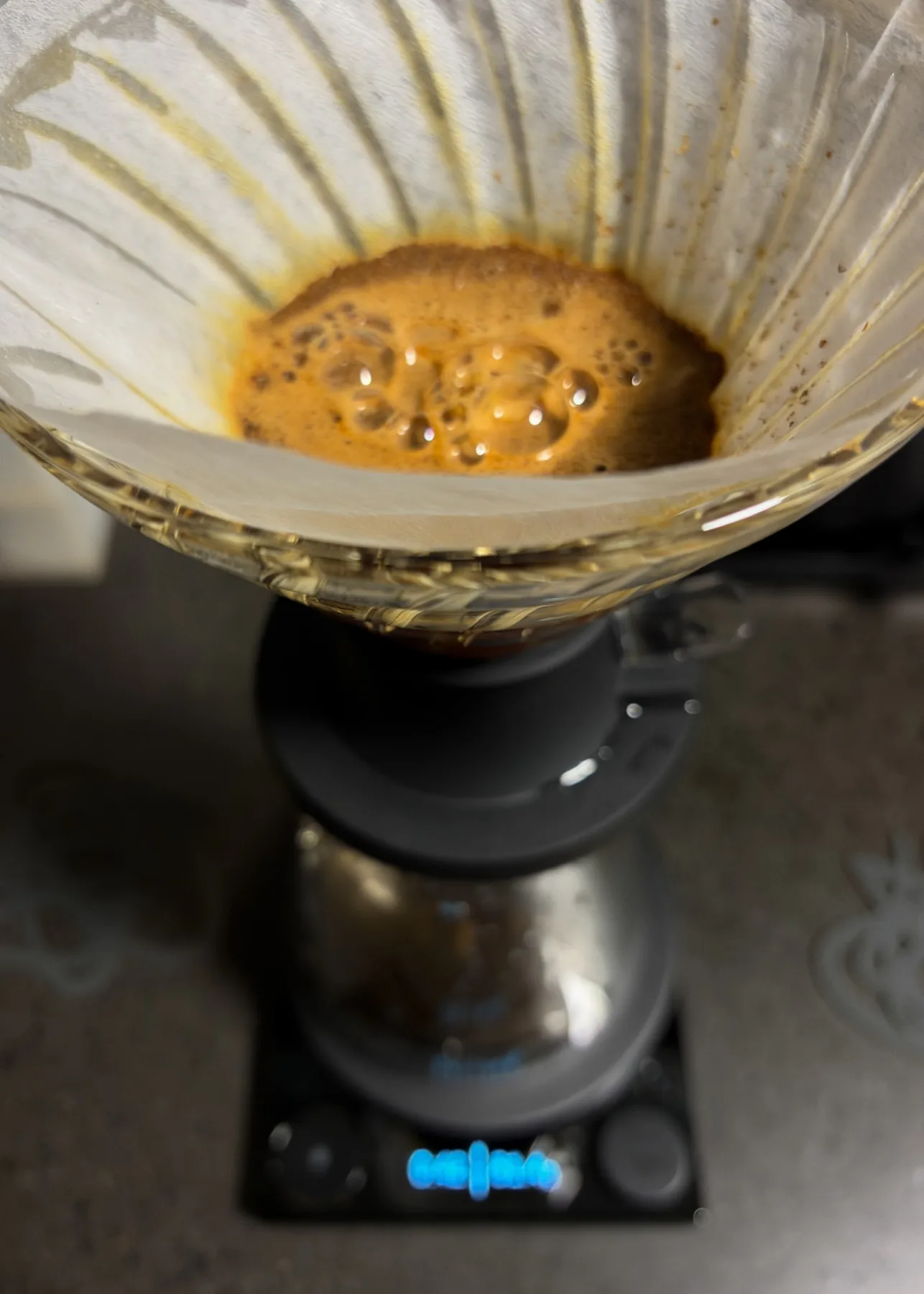
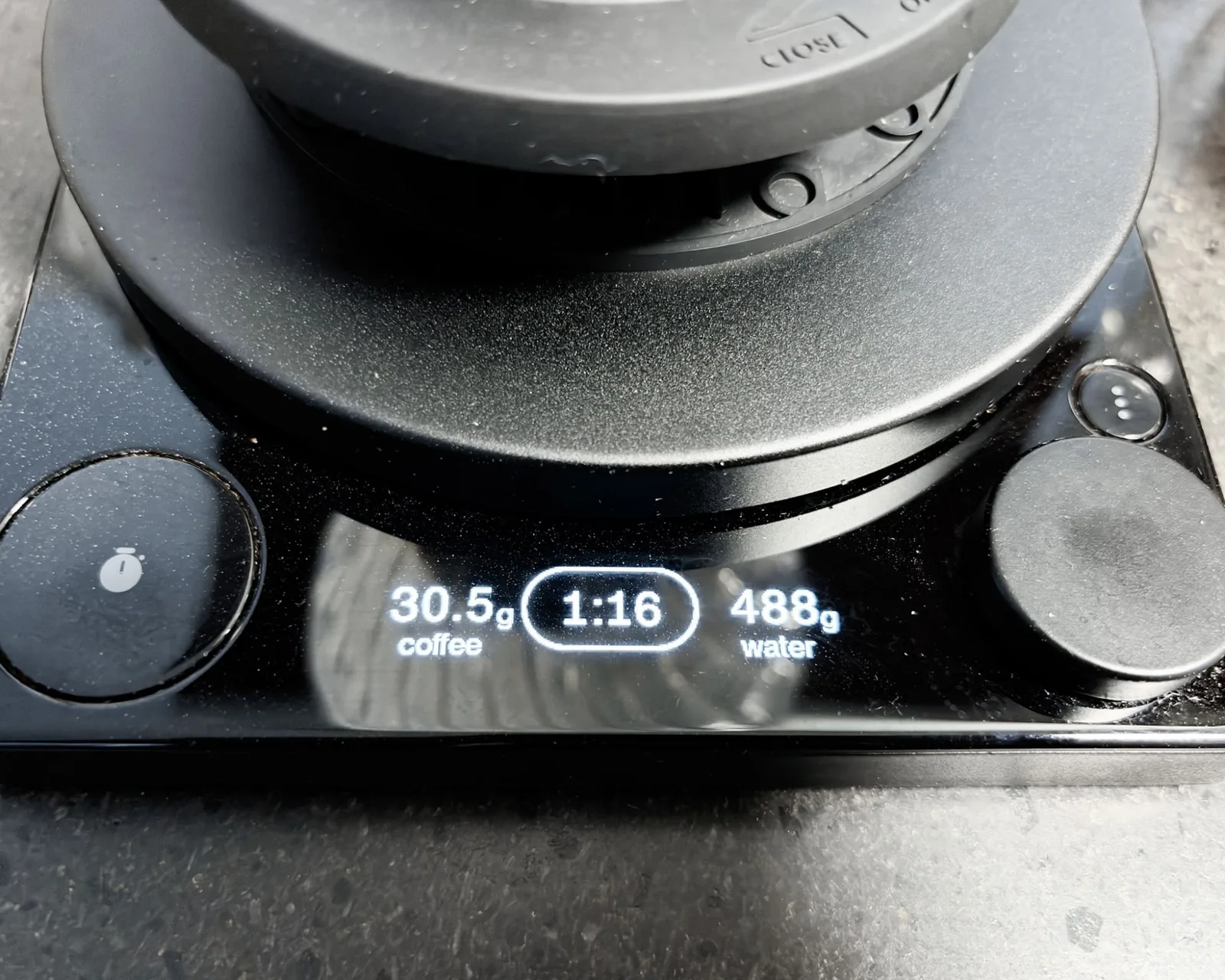
It all started with my scale. It allowed me to enter a proportion with the weight of the beans, and it would tell me how much water to use. What it didn't tell me was the water temperature or how to pour. I could find standard instructions, but I wondered if those were the right instructions for the particular beans I had.
As I was building my apps with AI tools, I wondered: if I did a quick analysis of the beans with the tools I had on hand, could it give me custom pouring instructions? As with anything AI, it could be done, but was it any good?
The setup starts with photos of my beans, various grinder elements, and the pour-over glass. I upload the photos and ask the AI to analyze the beans and suggest a recipe. From the bean type and roast date, it gives me a plausible rationale for the grind number, the water temperature, the number of pours and the amount for each.
Then I have it turn the recipe into a pour-over table. I just need the basics: whether the switch on the pour-over should be open or closed, how much water to add, and how long it should stay that way before the next pour.
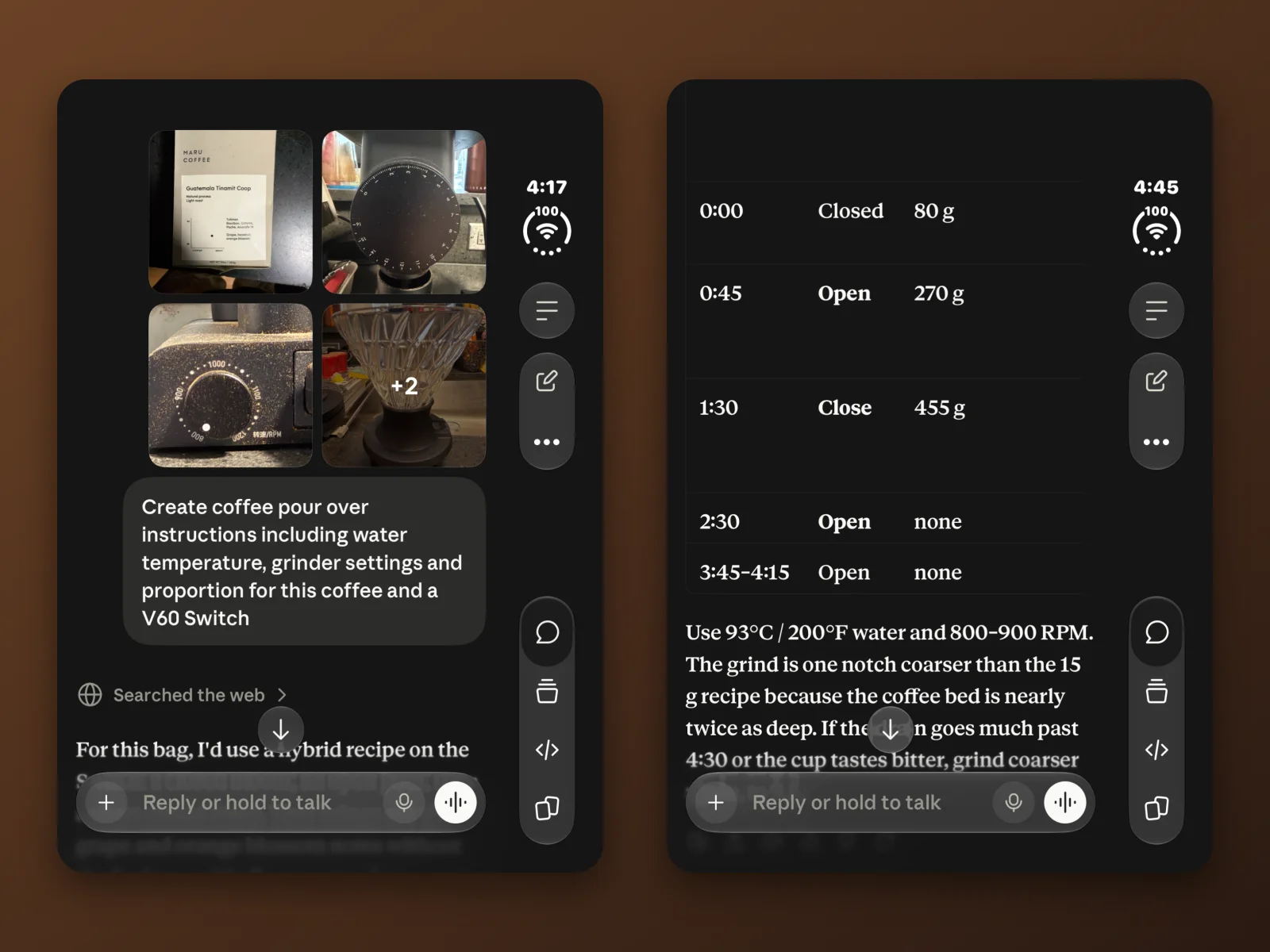
That's the initial setup for each bag. After that, every morning brew is just a photo of the measurements from the scale, sent into the Claude recipe, and back comes a table with the pour instructions.
Here's the catch: I don't have a way to know whether this is the best way to brew or a hallucination. The alternative is to use the same online pour-over instructions every time, which seems off, given how different each bean type and roast is. Since beans differ in origin and roast, it makes sense that the recipe should change slightly for each set of beans.
So I started asking bigger questions. When I get a new box, I ask for three possible orders for the four bags. It looks at the profiles and roast dates to suggest them. The suggested order usually moves from broad to more detailed flavor notes, and from heavier to lighter coffees.
Over the course of four bags, the story tends to become less about the progression and more about the beans at that particular time, yet there's a sense of build-up to the last bag. It's been a journey to get to the final bag. Each bag is quite good and unique, and in this order they tell a story that a random order wouldn't.
So, was it any good? For my purposes, yes. It's not quite a god shot each time, but I can taste a range of the best flavors for each bean profile. I still can't prove it's the best recipe. But it beats the same recipe every morning, and it turned a box of coffee into something with a beginning, middle and end.